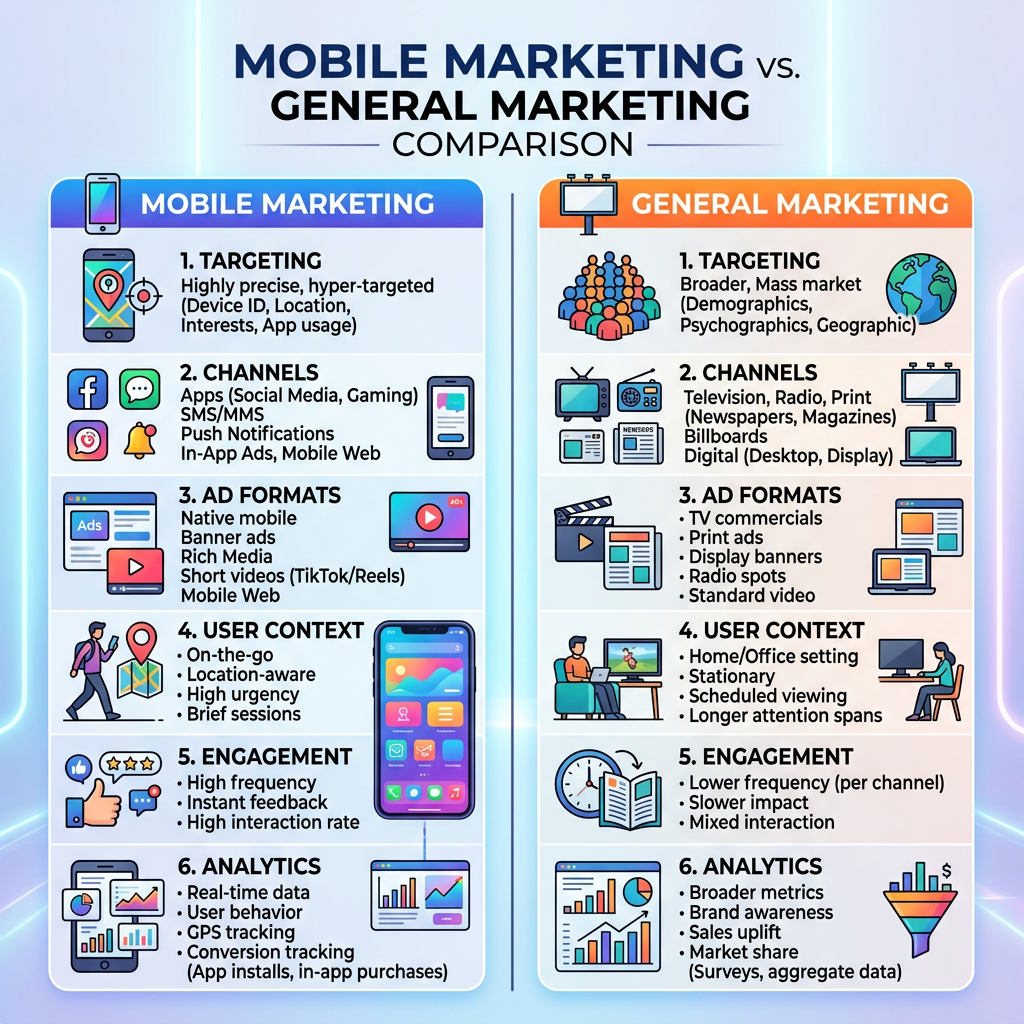
In today’s digital world, mobile phones and tablets have become essential tools for communication, shopping, entertainment, and everyday life. Because consumers spend so much time on their mobile devices, businesses are increasingly using mobile marketing instead of relying only on traditional marketing channels such as television, radio, newspapers, and billboards. Mobile marketing offers companies faster communication, personalized advertising, and stronger customer engagement, making it one of the most effective forms of marketing today.
One major advantage of mobile marketing is accessibility. Consumers carry their smartphones almost everywhere, allowing businesses to connect with them in real time. Traditional marketing methods often target broad audiences, while mobile marketing allows businesses to deliver personalized content based on customer interests, online activity, and even location. For example, companies can send push notifications, text message promotions, or targeted social media ads directly to consumers’ devices. This personalized approach increases customer engagement and improves the likelihood of a sale.
Mobile marketing also helps increase product awareness and sales more efficiently than traditional advertising. Businesses can use apps, social media platforms, and mobile-friendly websites to promote products instantly. Consumers can quickly click on advertisements and make purchases directly from their phones without needing to visit a physical store. This convenience creates a faster path from advertisement to purchase. In addition, mobile marketing supports location-based advertising, which allows businesses to send promotions to customers who are near a store location. This strategy encourages immediate action and increases foot traffic.
Another important benefit of mobile marketing is its ability to support customer loyalty programs and communication. Many businesses now offer mobile apps where customers can earn rewards points, receive exclusive offers, and track purchases. Mobile marketing also allows businesses to interact directly with customers through social media, surveys, and messaging features. Unlike traditional marketing, which is mostly one-way communication, mobile marketing creates opportunities for businesses and customers to engage in conversations and build stronger relationships.
Despite these advantages, mobile marketing also faces some challenges. One common issue is consumer privacy concerns. Many customers are cautious about sharing personal information or location data with businesses. Companies can address this concern by being transparent about how customer data is collected and used. Another challenge is advertisement overload. Consumers receive constant notifications and advertisements on their phones, which can sometimes feel overwhelming. Businesses can reduce this issue by creating relevant, personalized, and less intrusive content.
Another limitation is ensuring advertisements and websites function properly across different devices and screen sizes. Businesses can overcome this challenge by using responsive web design and regularly testing content on multiple platforms to improve user experience.
Overall, mobile marketing has become a powerful tool because it allows businesses to connect with consumers quickly, personally, and conveniently. As smartphone usage continues to grow, companies that invest in mobile marketing strategies will likely continue to increase customer engagement, strengthen loyalty, and improve sales in ways traditional marketing channels cannot match.
References
Kaufman, I., & Horton, C. (2015). Digital marketing: Foundations and strategy. Routledge.
Mobile marketing: Definition, how it works and examples. (n.d.). Investopedia. https://www.investopedia.com/terms/m/mobile-marketing.asp

